

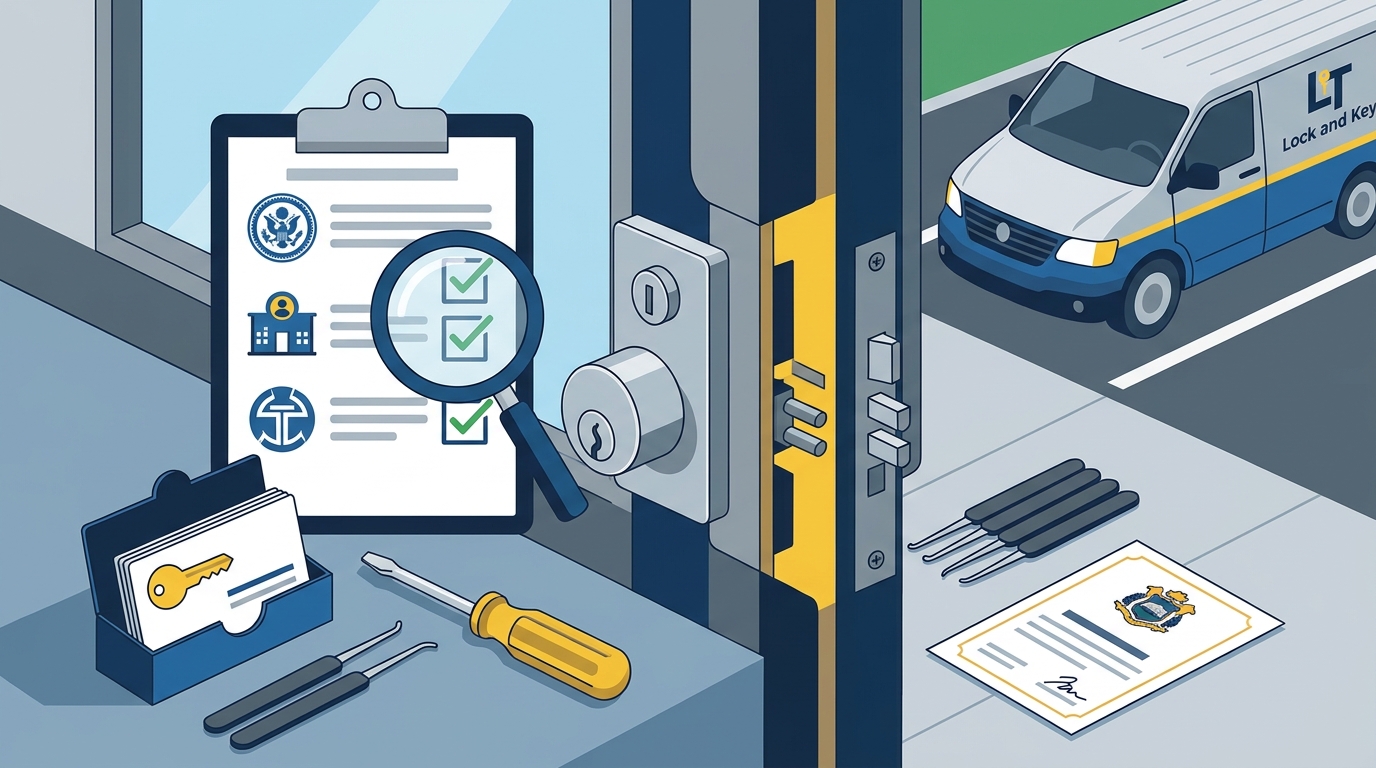
Verifying a commercial locksmith's credentials involves checking state licensing, business registration, and professional affiliations. In California, locksmiths must hold a specific license to operate legally. Proper verification protects your business from fraud and ensures high-quality security work.
Understanding California Locksmith Licensing
California is one of the few states that mandates specific licensing for locksmiths. A California locksmith license is a credential issued by the Bureau of Security and Investigative Services (BSIS) that authorizes an individual to perform locksmith services. This license ensures the holder has passed a background check and demonstrated technical competency. Without this license, a locksmith is operating illegally in the state.
For commercial clients, verifying this license is the first and most critical step. The BSIS maintains a public database where you can search for active licenses. You should confirm that the name of the technician or the business entity matches the license holder. This step filters out unlicensed operators who may pose a security risk to your property.
Checking Business Registration and Physical Presence
While individual licensing is mandatory, business registration provides an additional layer of accountability. A registered business entity is a legal structure that holds the business liable for its actions. In California, you can verify business registration through the Secretary of State's business search tool. This confirms that the company is legally operating and in good standing.
Furthermore, a legitimate commercial locksmith should have a verifiable physical address or a registered mobile base. LT Lock and Key operates from Encinitas and serves North County San Diego, providing a clear local presence. Scammers often use fake addresses or generic call centers. Asking for a specific street address helps distinguish established local providers from transient fraud rings.
Professional Affiliations and Insurance
Professional affiliations signal a commitment to industry standards. Membership in organizations like the Associated Locksmiths of America (ALOA) is a strong indicator of a serious professional. These organizations require members to adhere to a code of ethics and maintain specific insurance coverage. While not legally required in all cases, these affiliations demonstrate a higher level of professionalism.
Insurance is another critical credential to verify. General liability insurance protects your business if property is damaged during a job. Workers' compensation insurance covers the locksmith if they are injured on your premises. Always ask for a certificate of insurance before allowing a technician on your property. This protects you from potential liability claims.
Red Flags and Verification Steps
Knowing what to look for is as important as knowing what to check. A legitimate locksmith will willingly provide their license number and business details. They should also ask for your identification to verify you are the property owner or authorized manager. This mutual verification process is a hallmark of professional conduct.
Be wary of locksmiths who refuse to provide a written estimate before starting work. They should also avoid using high-pressure tactics or demanding cash-only payments. Commercial locksmith services from reputable providers involve transparent pricing and clear communication. If a provider seems evasive about their credentials, walk away.
Key Takeaways
- Verify the individual locksmith's California BSIS license number.
- Check the business registration with the California Secretary of State.
- Confirm the company has a verifiable physical address or local base.
- Ask for proof of general liability and workers' compensation insurance.
- Look for professional affiliations such as ALOA membership.
- Ensure the locksmith asks for your ID to verify property ownership.
- Request a written estimate before any work begins.
Frequently Asked Questions
Is a license required for locksmiths in California?
How can I verify a locksmith's license?
You can search the BSIS public database online using the locksmith's name or license number to confirm their status is active.
Do I need to check the business registration?
Yes, verifying business registration with the Secretary of State ensures the company is legally operating and in good standing.
What insurance should a commercial locksmith have?
They should carry general liability insurance and workers' compensation to protect both their employees and your property.
Why do locksmiths ask for my ID?
Legitimate locksmiths verify your identity to ensure you are the authorized property owner or manager before performing work.
Can I use a locksmith without a license?
No, hiring an unlicensed locksmith is illegal in California and poses significant security and legal risks to your business.
Conclusion
Protecting your commercial property starts with hiring a verified professional. By checking state licenses, business registrations, and insurance, you ensure your security is in capable hands. Contact LT Lock and Key for reliable, licensed locksmith services in Encinitas and North County San Diego.