
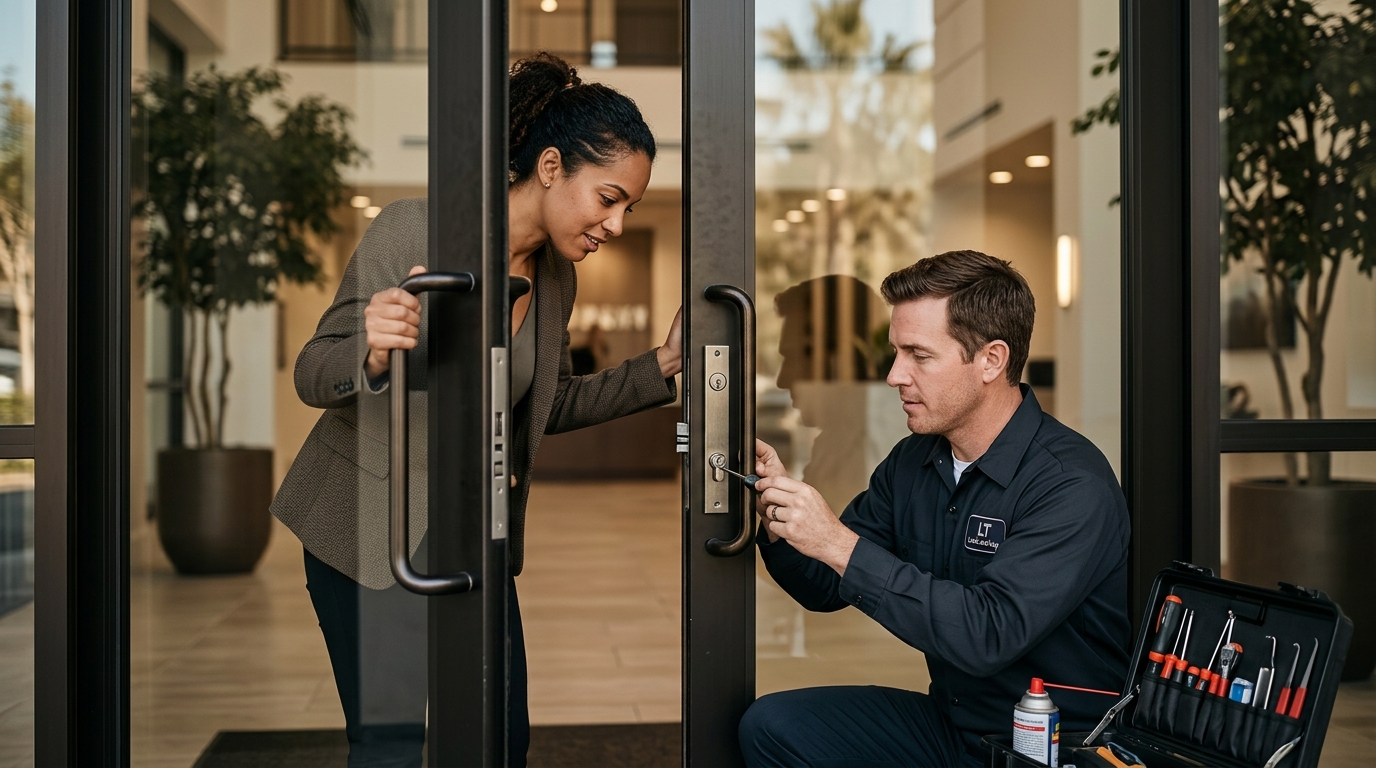
Business owners should inspect commercial door hardware monthly, lubricate moving parts quarterly, and replace worn components immediately to prevent security breaches. LT Lock and Key emphasizes that proactive maintenance extends the lifespan of high-traffic entry points and ensures compliance with safety standards. Regular professional servicing prevents costly emergency repairs and maintains consistent access control for employees and customers.
Understanding Commercial Lock Lifespan and Wear
Commercial door locks experience significantly higher stress than residential units due to constant use. A standard commercial lock is a mechanical assembly designed to withstand thousands of cycles, but friction and impact degrade internal pins and springs over time. Most commercial locks last between 10 and 15 years, depending on usage frequency and maintenance quality. High-traffic areas like retail storefronts or office lobbies require more frequent attention than low-use back doors.
LT Lock and Key technicians observe that neglecting minor issues leads to major failures. For example, a sticking latch can cause the door to slam shut, damaging the frame and compromising the seal. Identifying wear early allows for simple repairs rather than full replacements. This approach saves businesses money and minimizes downtime.
Essential Monthly Inspection Checklist
A structured inspection routine helps identify problems before they escalate. Business owners should check for loose screws, misaligned hinges, and smooth key operation during monthly rounds. Door closers must be adjusted to ensure doors close fully without slamming. This prevents gaps that could allow unauthorized entry or let in weather elements.
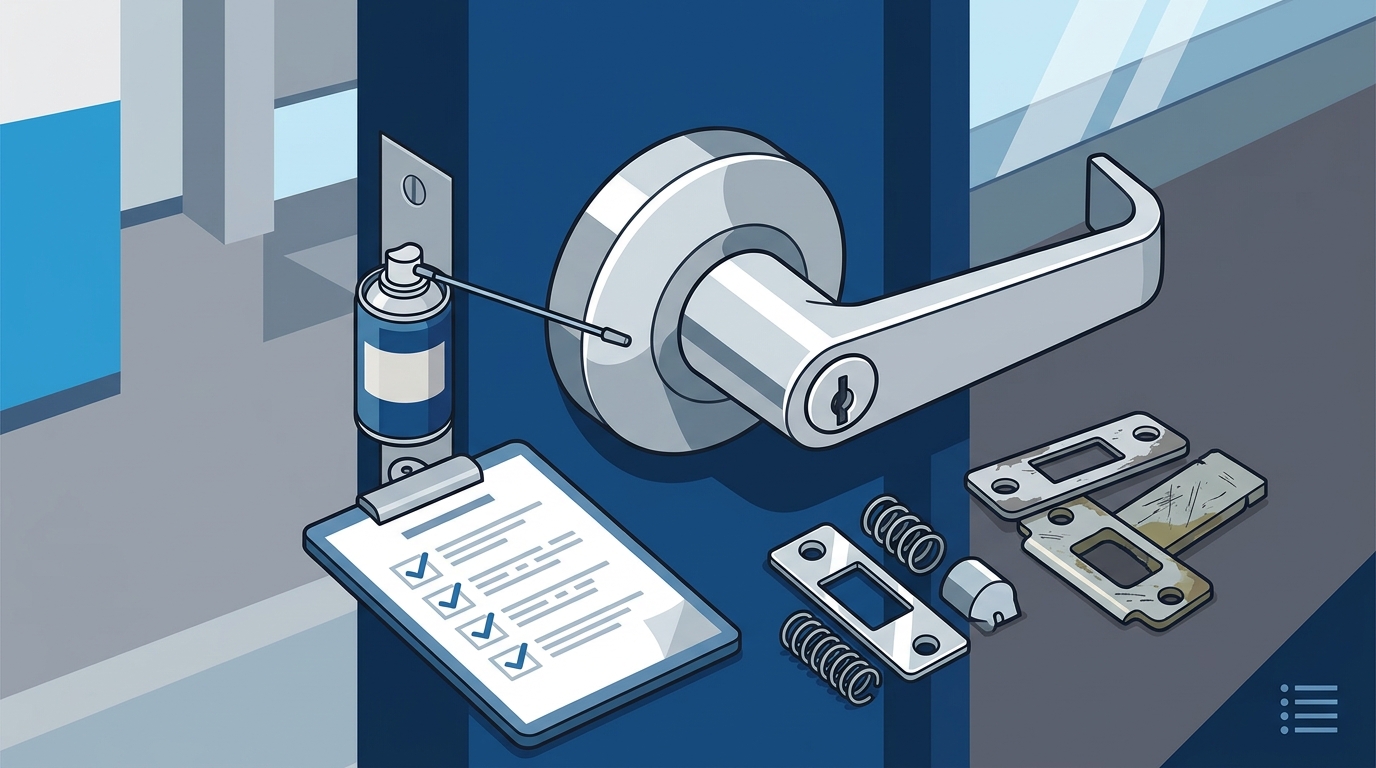
Inspecting the strike plate is equally critical. If the strike plate is worn or misaligned, the lock may not engage properly. LT Lock and Key recommends documenting any anomalies in a maintenance log. This record helps track patterns and plan for future upgrades. Consistent checks ensure that security hardware remains reliable and functional.
Lubrication and Component Care
Proper lubrication reduces friction and prevents premature wear on lock cylinders and hinges. Business owners should use dry graphite lubricant or silicone spray on lock mechanisms quarterly. Avoid using oil-based products, which can attract dust and gum up internal parts. Hinges should be checked for rust and lubricated as needed to ensure smooth door movement.
Door hardware such as handles and push bars also requires cleaning and inspection. Grime buildup can interfere with operation and make surfaces difficult to clean. LT Lock and Key advises using mild cleaners and soft cloths to maintain hardware appearance and function. Regular care preserves the professional look of your facility while ensuring security integrity.
When to Replace vs. Repair Hardware
LT Lock and Key helps business owners evaluate the condition of their hardware during service visits. We assess whether a repair will restore full functionality or if a new unit is necessary. This guidance ensures that investments in security hardware provide long-term value. Replacing worn components proactively prevents unexpected lockouts and security vulnerabilities.
Professional Maintenance Services
While basic checks can be performed in-house, professional maintenance provides a deeper level of assurance. Certified locksmiths can diagnose complex issues and perform precise adjustments that non-specialists might miss. LT Lock and Key offers comprehensive commercial locksmith services, including lock repair, rekeying, and installation. Our technicians bring the necessary tools and expertise to handle any commercial door hardware issue.
Scheduling regular professional inspections ensures that your security system remains up to date. We can also advise on upgrades to digital locks or access control systems if your business needs enhanced security. Partnering with a trusted local provider like LT Lock and Key ensures that your commercial property is protected by the latest standards and best practices.
Key Takeaways
- Inspect commercial door hardware monthly to catch minor issues early.
- Lubricate lock mechanisms and hinges quarterly with appropriate products.
- Replace locks older than 15 years or those with significant damage.
- Document maintenance activities to track hardware performance over time.
- Engage professional locksmiths for complex repairs and security upgrades.
- Ensure door closers and strike plates are aligned for proper engagement.
Frequently Asked Questions
How often should commercial door locks be inspected?
Business owners should perform basic visual inspections monthly and schedule professional maintenance at least once a year. High-traffic doors may require more frequent checks to ensure consistent performance.
What type of lubricant is best for commercial locks?
Use dry graphite lubricant or silicone spray for lock cylinders. Avoid oil-based lubricants, which can attract dust and cause internal components to stick over time.
Can a locksmith repair high-security commercial door hardware?
Yes, certified locksmiths can repair and maintain high-security commercial hardware. LT Lock and Key provides expert services for a wide range of commercial lock systems, ensuring they function correctly and securely.
How do I know if a lock needs replacement?
Replace a lock if it is older than 15 years, has sustained impact damage, or no longer operates smoothly despite repairs. Modern replacements often offer better security and durability.
Does LT Lock and Key offer same-day commercial lock service?
Yes, LT Lock and Key offers same-day service for commercial lock repairs and installations in Encinitas, Carlsbad, Del Mar, and surrounding North County San Diego areas.
What areas does LT Lock and Key serve for commercial locksmith needs?
LT Lock and Key serves all of San Diego County, including Encinitas, Carlsbad, Del Mar, Carmel Valley, Oceanside, and Escondido, providing comprehensive commercial security solutions.